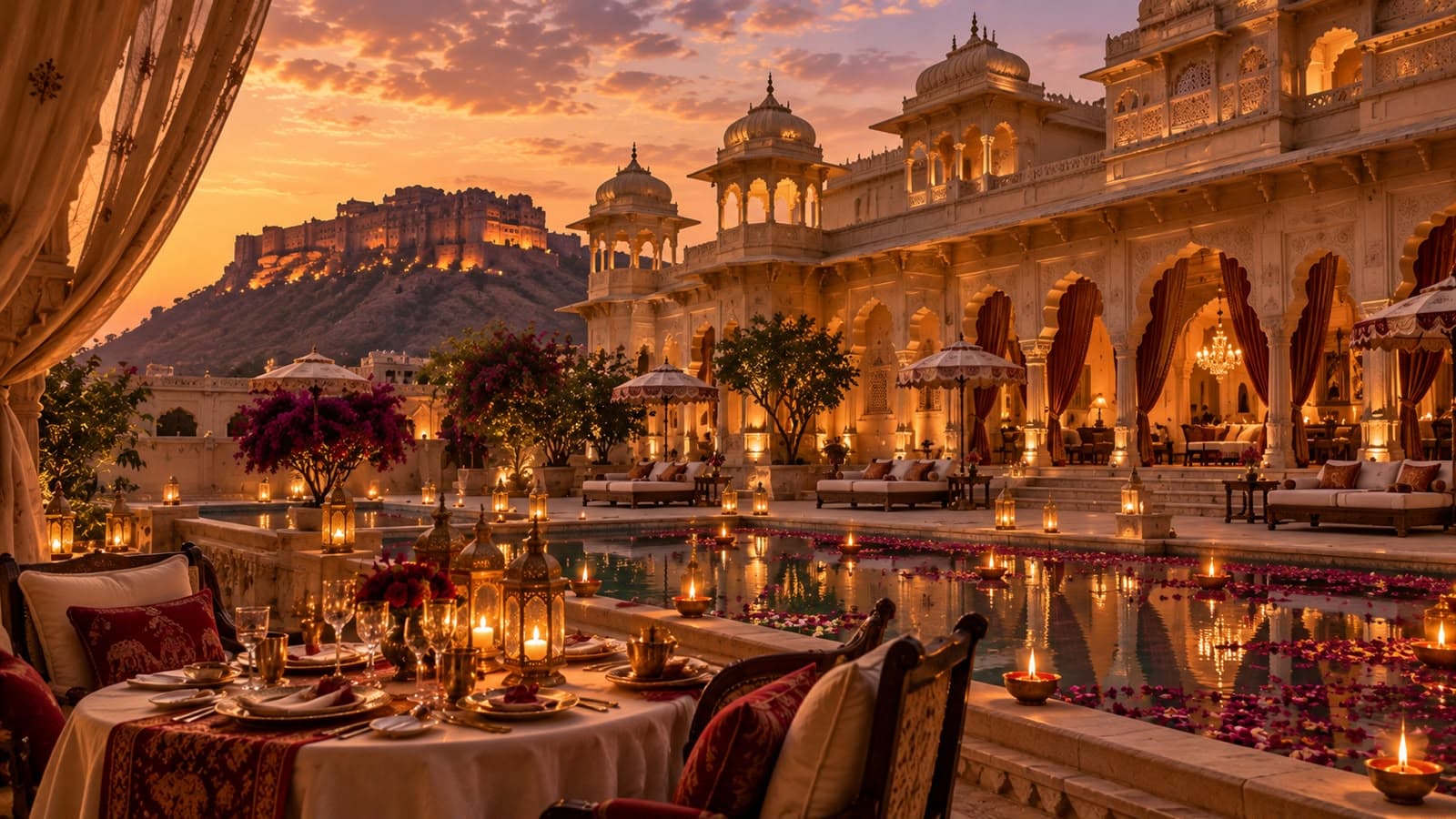
Inside India’s Most Extraordinary Palace Hotels
It is easy to mistake Rajasthan’s palaces for monuments— grand, preserved, admired from a respectful distance. But step past the sandstone archways of certain residences, and it becomes clear that history here has not been museumed away. It is still being lived, quietly, by families who have called these halls home for generations.
To be received into one is not to check into a hotel in any conventional sense. It is to be welcomed, however briefly, into a household whose rhythms predate the idea of hospitality as an industry—where a private audience still carries the weight of occasion, and where the frescoed ceiling above your bed was painted for an ancestor you will never meet.
This is a story less about what to see in Rajasthan, and more about what it feels like to be, for a few days, a guest inside a way of life that has continued, largely unbroken, since long before either of you existed.
A Palace That Is Still a Home
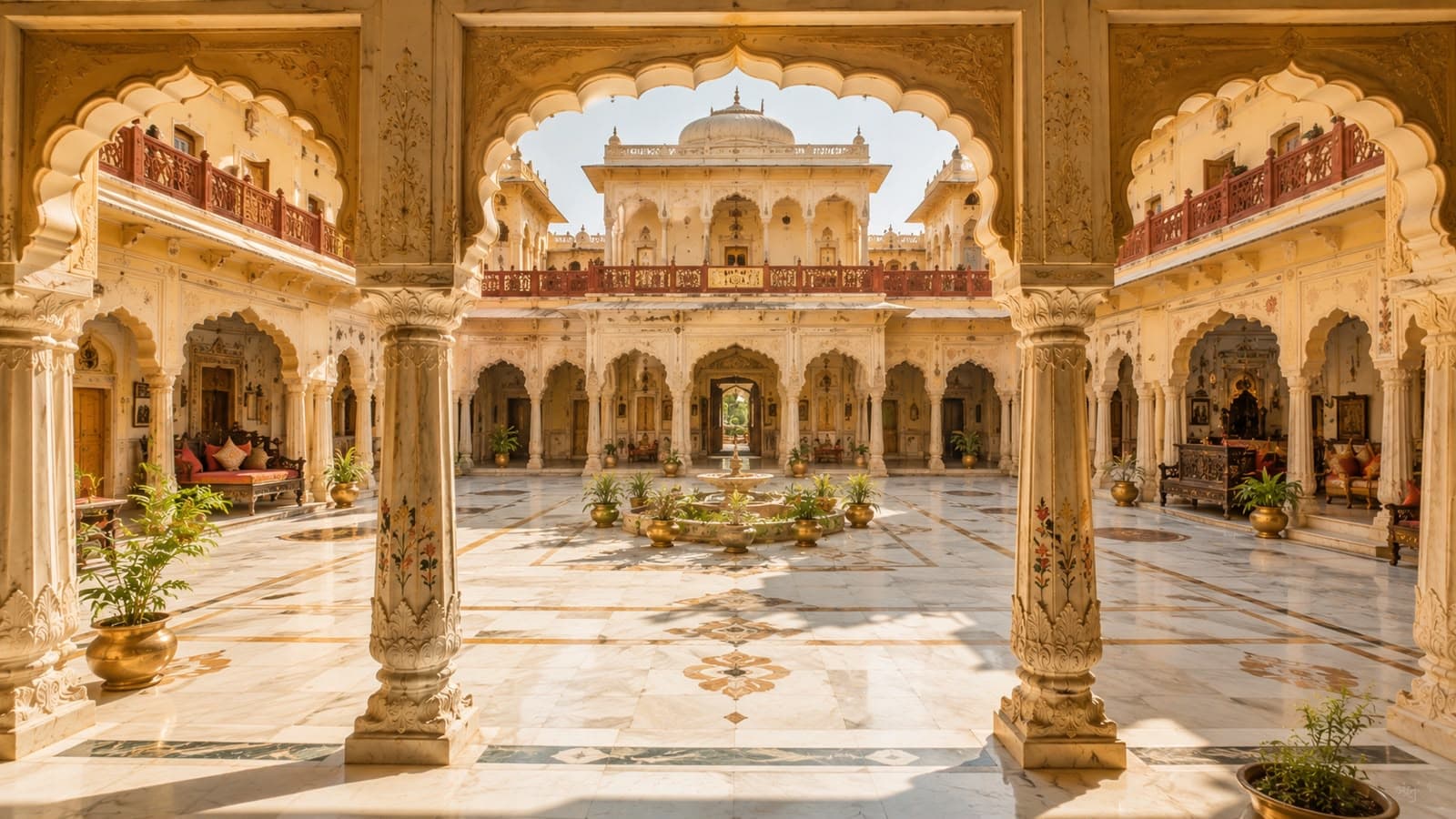
In a quiet wing of one such residence, a family still gathers for breakfast in a room where their great-grandfather once held court. The marble underfoot has been walked so consistently, for so long, that it has taken on a soft, almost liquid sheen—proof less of neglect than of continued, unhurried use.
Nothing about the space performs its history for a visitor. A courtyard sits in midday silence, its fountain switched off more often than on, simply because no one has felt the need to switch it on. A portrait gallery lines a corridor that the family still uses to reach the dining hall, ancestors watching over a room that has never stopped being occupied.
To stay here, even briefly, is to understand that the grandest rooms in Rajasthan were never designed to be looked at. They were designed to be lived in—and in the finest palaces, that is precisely what continues to happen, guests folded gently into a household rhythm that has never really paused.
The Hands Behind the Halls
Behind every marble hall lies the quieter labour of those who keep it standing. Master craftsmen still repair frescoes using pigments mixed to recipes their fathers taught them— lapis ground by hand, gold leaf applied one breath-held motion at a time. There is no substitute for this patience, and no machine has yet been trusted to attempt it.
Elsewhere in the palace, a family of stone carvers restores a jali screen panel by panel, each lattice cut with the same unhurried precision as the original artisans who shaped it centuries ago. They speak of the work not as restoration, but as continuation—an unbroken conversation between hands separated by generations, but not by intention.
It is this craftsmanship, more than any single room or view, that gives these palaces their particular gravity. Nothing here was simply built once and left to age. It has been tended, continuously, by people who understood that beauty this precise requires someone, always, to keep caring for it.
An Evening Ceremony
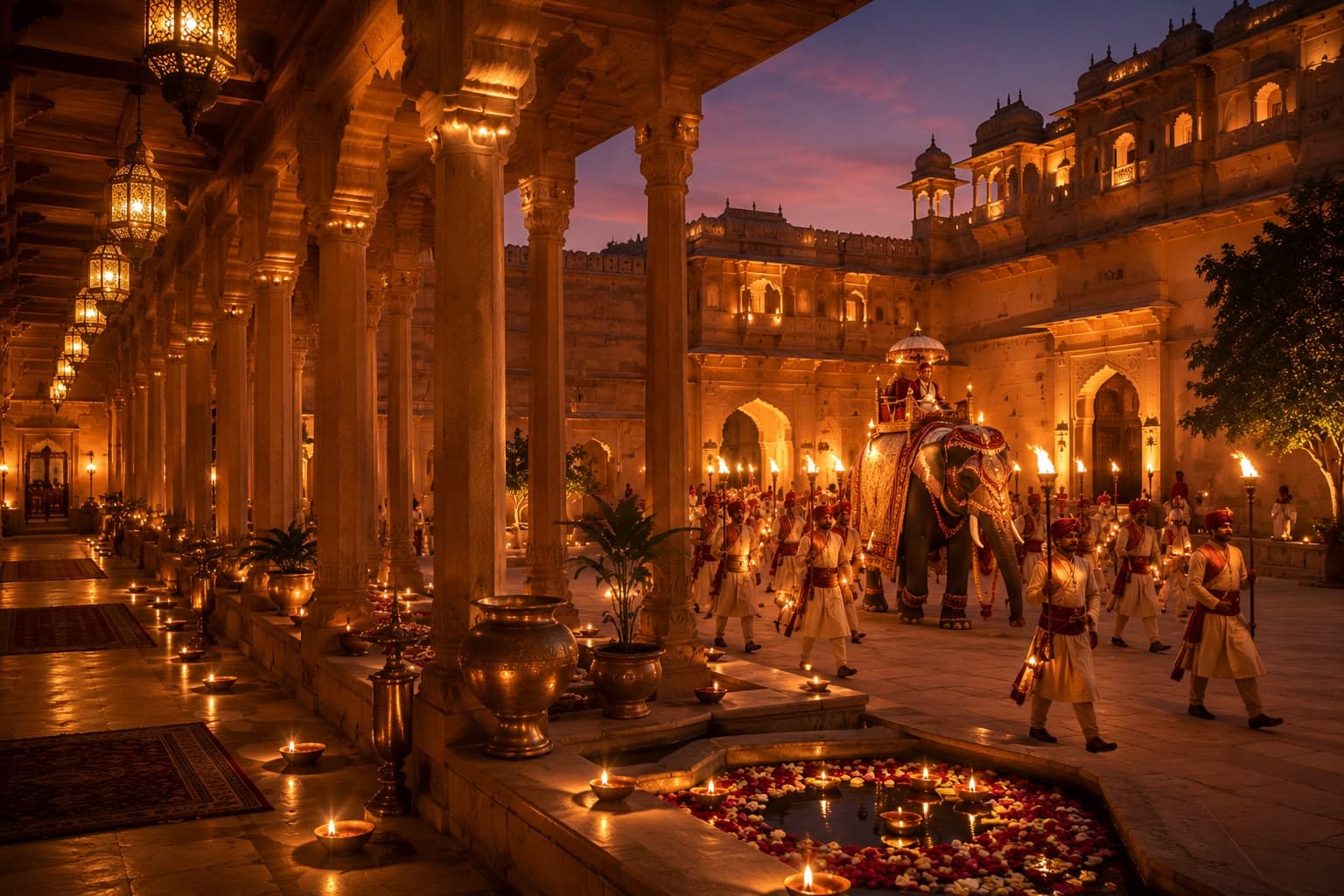
As dusk settles over the courtyard, a small procession begins without announcement—a lamp lit here, a door opened there, a particular sequence followed exactly as it has been for as long as anyone in the household can remember. Guests are rarely told what to expect. They are simply invited to witness.
A private audience with a family elder might follow, brief and unhurried, conducted with the same quiet formality once extended to visiting dignitaries. There is no performance in it—only a tradition of welcome that has simply never found a reason to change.
By the time dinner is served, beneath a ceiling painted for occasions long since forgotten, the evening has taken on a rhythm entirely its own—one measured not in courses or minutes, but in the slow, deliberate unfolding of a ceremony that predates its guests by centuries.
History Still Being Lived
It would be simpler, perhaps, to describe these palaces as extraordinary hotels—beautiful buildings put to elegant new use. But that description misses what makes them irreplaceable: the families who never left, the craftsmen who never stopped tending them, the ceremonies that were never revived because they never actually ended.
To travel through Rajasthan this way is to be reminded that heritage, at its finest, is not something preserved behind glass. It is something inhabited—quietly, patiently, by people for whom the past is not a subject of study but a continuing, everyday inheritance.
A journey shaped around this understanding asks for very little from the traveller beyond attentiveness. What it offers in return is rare: not a glimpse of history, but a brief, privileged place within it.
Ready to Experience Rajasthan Differently?
Let us design a journey around Rajasthan’s living heritage—its palace families, its artisans, its evening ceremonies—shaped entirely around the way you wish to travel.
Begin Your Private Consultation